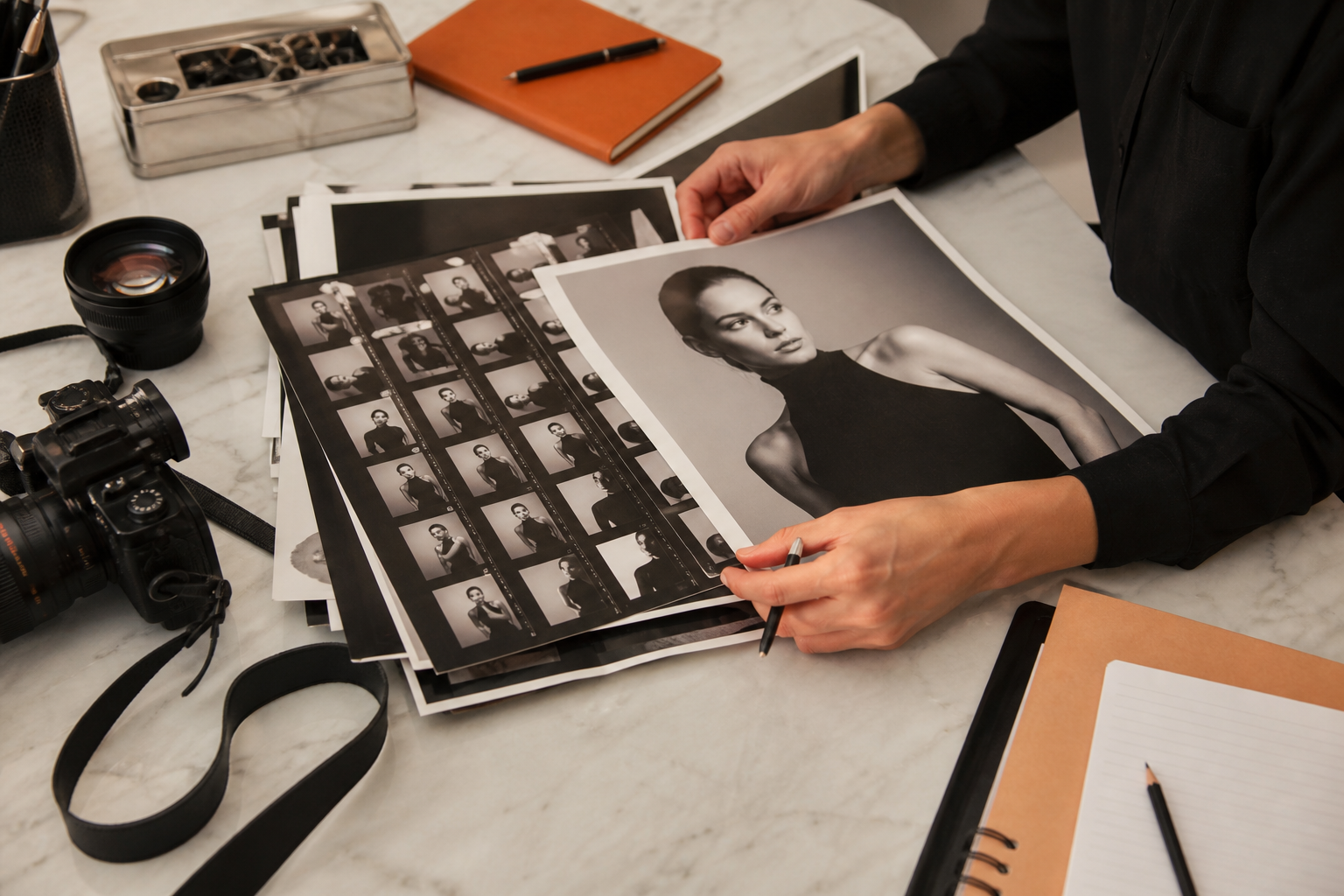
Begin an edit by removing frames with technical problems, accidental expressions or distracting details. This first pass should be quick and generous. The aim is not to find winners immediately but to reduce noise so that relationships between images become easier to see.
On the second pass, group similar frames and compare them directly. Look beyond sharpness. Which photograph has the clearest gesture, strongest connection between subject and setting, and most useful negative space? Tiny differences in hands or gaze can determine whether an image feels resolved.
Then consider sequence. A story benefits from changes in scale, pace and emotion: a wide establishing frame, a direct portrait, a detail and a moment of movement. Avoid filling the sequence with images that repeat the same message, even when each is individually attractive.
Give the edit time before final delivery. Returning with fresh attention often reveals favorites chosen from memory rather than from the actual frame. A concise selection respects the viewer, strengthens the work and makes every published image feel necessary.