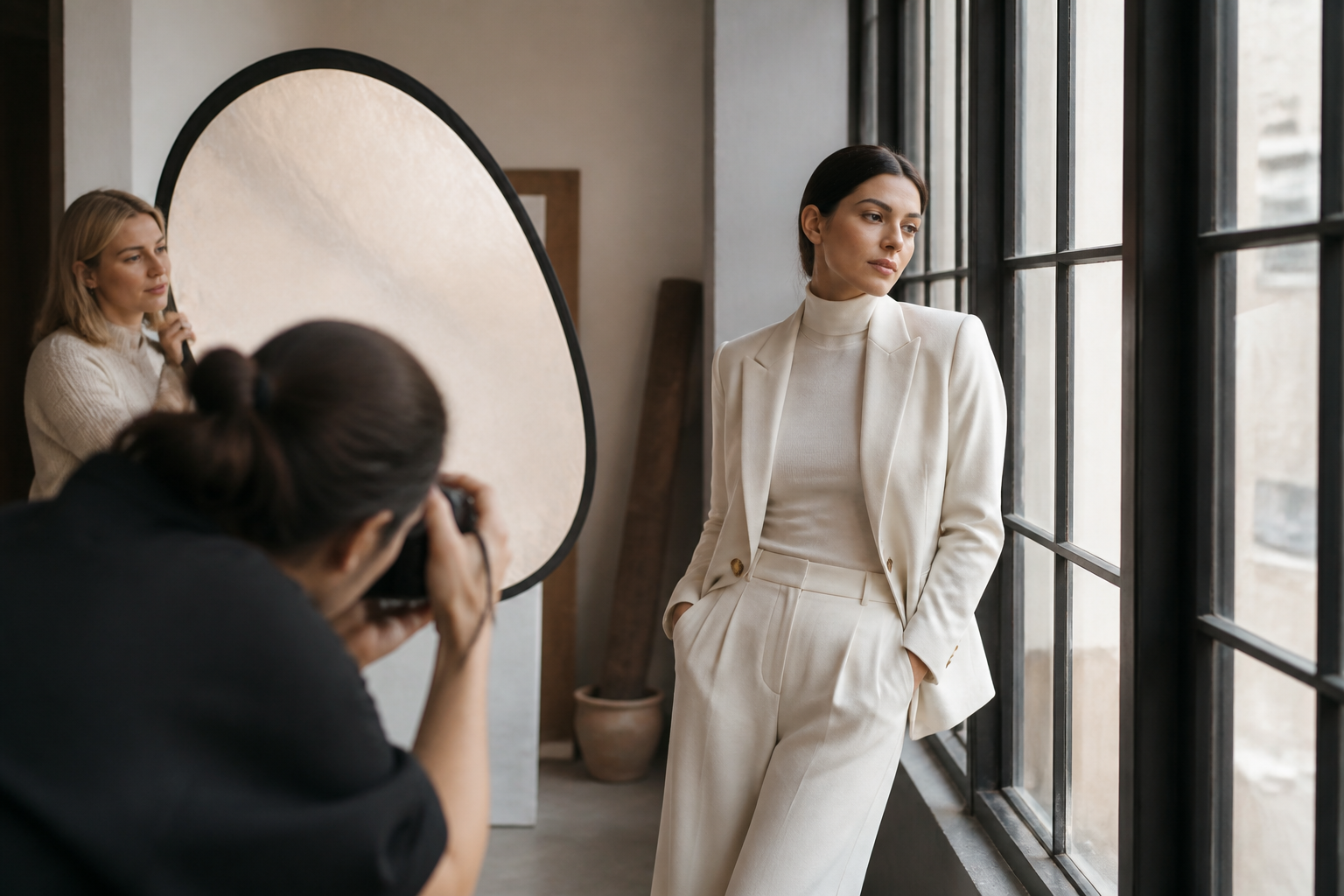
Natural light is accessible, but it is never completely simple. Its color, direction and intensity change with weather, time and surrounding surfaces. The first step is to observe rather than immediately photograph. Look at where highlights fall, how quickly shadows deepen and whether reflected color is affecting skin or clothing.
A large window creates a broad directional source. Moving closer increases contrast and softness at the same time; stepping farther into the room often makes the light more even but less intense. Turning the face gradually changes how features are shaped, so small adjustments are worth exploring.
Outside, open shade can offer consistent illumination without direct overhead sun. Choose shade that opens toward a bright area and watch for green color reflected from foliage or strong color from nearby walls. Background brightness matters too: a beautiful face can disappear if the setting competes for attention.
Natural-light portraits benefit from a calm pace. Let eyes adapt, check exposure carefully and keep the styling connected to the environment. The result should not look unplanned simply because the light was available. Restraint, observation and purposeful placement are what make a simple source feel editorial.